
An Interview with James Litchfield and Lucinda Reynolds of Alphabet Lane (2026)
Charlotte (Vice President, FilmSoc) and I (Digital Content Director, SURG) sat down with James Litchfield and Lucinda Reynolds, the writer-producer duo behind Alphabet Lane (2026). You can see it on screen on Saturday September 5 as part of the Sydney Opera House’s Australian film program.
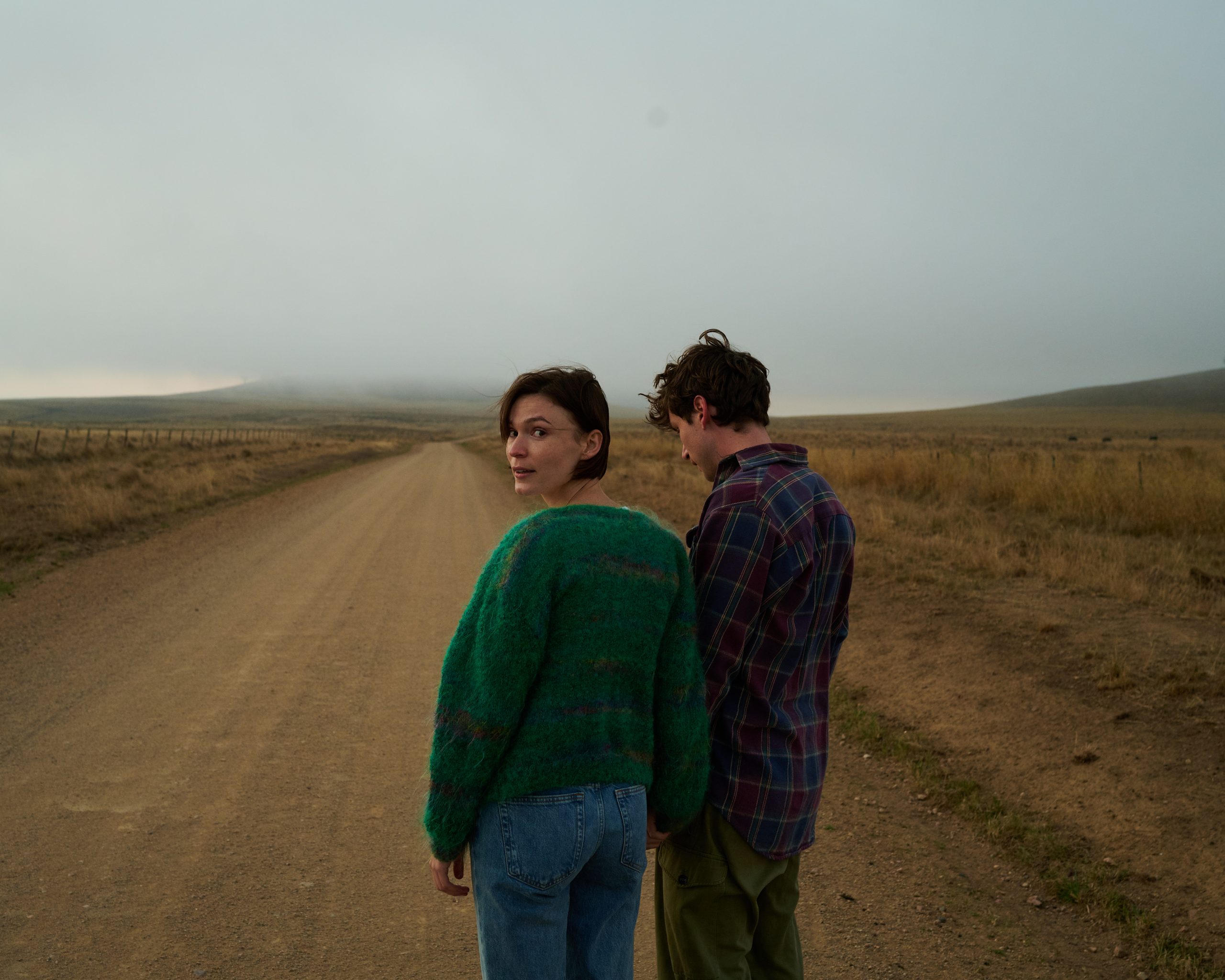
Shot on the family cattle farm in rural NSW where first-time feature director James grew up, the thriller follows isolated young couple Anna (Tilda Cobham-Hervey) and Jack (Nicholas Denton) as they try to reinvigorate their relationship after moving to a small country town. With the reality of their new situation failing to live up to their expectations, they jokingly invent imaginary neighbours to cope with their growing loneliness. As letters begin to arrive from their new friends, what started out as a joke soon comes to take over their entire relationship.
Being a first-time director and a disaffected law student, respectively, we had lots to talk about. Firstly, about the Studies in Religion discipline, where Charlotte and I met, and our teachers’ contributions to the new Handbook of Contemporary Religion, Film, and Television (Brill, 2026). Secondly, James’ lawyer-turned-creative career arc. Thirdly, Charlotte’s feature film in the works (slated for release this October) …
CHARLOTTE: As an aspiring filmmaker myself, I’ve noticed there’s a lot of technological information barriers relating to the new filmmaking processes, from industry standards and camera use to post-production. So, I wanted to ask: How would you encourage those without the formal education surrounding the filmmaking process to sort of make connections and attempt creating? Because I also feel like there’s an expectation, which I feel, for emerging filmmakers to make no-budget features so they can get further funding later.
JAMES: Yeah, so I did go to film school, but I’d already made lots of shorts before I did. I was just making shorts on the weekend for ages. It was me sometimes acting, and then like, a [cinematographer], a sound person, and maybe another actor, and that was it, for ages. And actually the best shorts I made, I think, or the ones I’m most proud of … that was how I made them.
One of those people was an actor who’s in Alphabet Lane and was also in a play we just put on. I actually just knew him socially. And he was getting into acting at the same time that I wanted to start making films. And so we just, like, got on and started like that.
I guess getting into gear is interesting, but it’s also just … not. It’s just not the thing that you need to worry about, really. I found, when I went to VCA, that I was actually grateful for the time I’d had before that when I’d been making things with literally no judgement at all, and like, no one. Having that time of just doing literally whatever I felt was right and not listening to anyone was so good because it really helps you find a voice. And then similarly, when I was at VCA, it was actually during COVID. You could just experiment and do all these things. I guess that is one good thing about technology –– you didn’t used to be able to do that; you’d need a digital camera to be able to work like that, I think.
LUCY: We heard that Alphabet Lane centres on this fantasy of the better life that’s promised in the country … Um, but being Studies in Religion students, if we talk in terms of a civil religion, like what binds us together –– Australia’s ethos –– it’s definitely moved away from this rural iconography and, like, pastoral egalitarianism, right? And it’s kind of more cosmopolitan stuff now. We celebrate how mature and sophisticated and closely coexistent we’ve become. So I wonder if the kind of purchase we have on this nostalgic pastoral identity, even though we may have no personal connection to the country and its unique problems … did this kind of hypocrisy inspire the dark comedic aspects of the film?
JAMES: Yeah, I think that’s a great question. I would definitely agree that mythology, or whatever you want to call it, is definitely waning. But I definitely know people –– city people who are the characters in the film –– are very drawn to this vision of what the country is [and] how [this vision] gets in the way of you engaging with it. But then I think as well, when I wrote it, I had a lot of friends moving overseas or moving to the country or just doing all sorts of changes. I guess people will always have a certain idea of what they’re getting themselves into or why they’re doing something and the reality just never ever aligns with your expectations and people sometimes deal with that well and sometimes deal with that poorly.
LUCY: I think the analogy of this couple projecting these imaginary neighbours into their own lives … that’s really cool, because to me, that reflects the imaginary of Australia’s history in particular and how it relates to us. But I’m excited to see that explored within a partner dynamic too.
LUCINDA: One of the really interesting dynamics in the film is the relationship between Jack, the partner of Anna, and Corey, who owns the beautiful Hammond farm. He chooses to kind of live on a simpler block out the back. And I think one of the things that sort of attracted me to the project is seeing that kind of authentic lens that James had just through living out there, but that there’s also this really interesting bromance between the two male characters. At first he’s sort of so gruff and silent and busy and doesn’t have time for them, and it has this kind of tension between who we perceive rural friendly farmers to be and who they actually are. Over time, you sort of get to know this character in a more real way and see him for who he is. It’s kind of interesting that I think that dynamic really speaks to what you’re talking about in terms of, yeah, breaking through the kind of idealism and dismantling myth of what we think of the country and people who live in it.
CHARLOTTE: Yeah, I feel like the conditions of the situation that the couple is in are really interesting. That [Alphabet Lane] was written before, like, lockdown [after which] lots of people moved to the country and even now, AirBnBs are popping up everywhere and people just want to go for like a weekend away … It’s sort of like this idealised version of living in the country, without the actual labour of managing a property, you know? It’s just like what, what’s left? And how do we understand this landscape that also is so different to what Australia used to be like, prior to pastoralism and all of that? So, it is sort of like a nowhere space where like a lot of people are trying to negotiate their identity. It’s a really interesting and poignant topic for a film, and a beautiful setting, I’m sure.
James, you grew up on the property that you filmed at, right? How did you capture your experience and understanding through the camera? Do you think that you were able to adequately replicate your love for this space and your understanding of this space through the film?
JAMES: You used the word ambiguous somewhere before. The landscape, I think, is kind of ambiguous; Cooma.
CHARLOTTE: It is sort of gothic.
LUCINDA: Yeah, yeah, we use that word gothic. You always say as well, it’s like … beautiful and inhospitable.
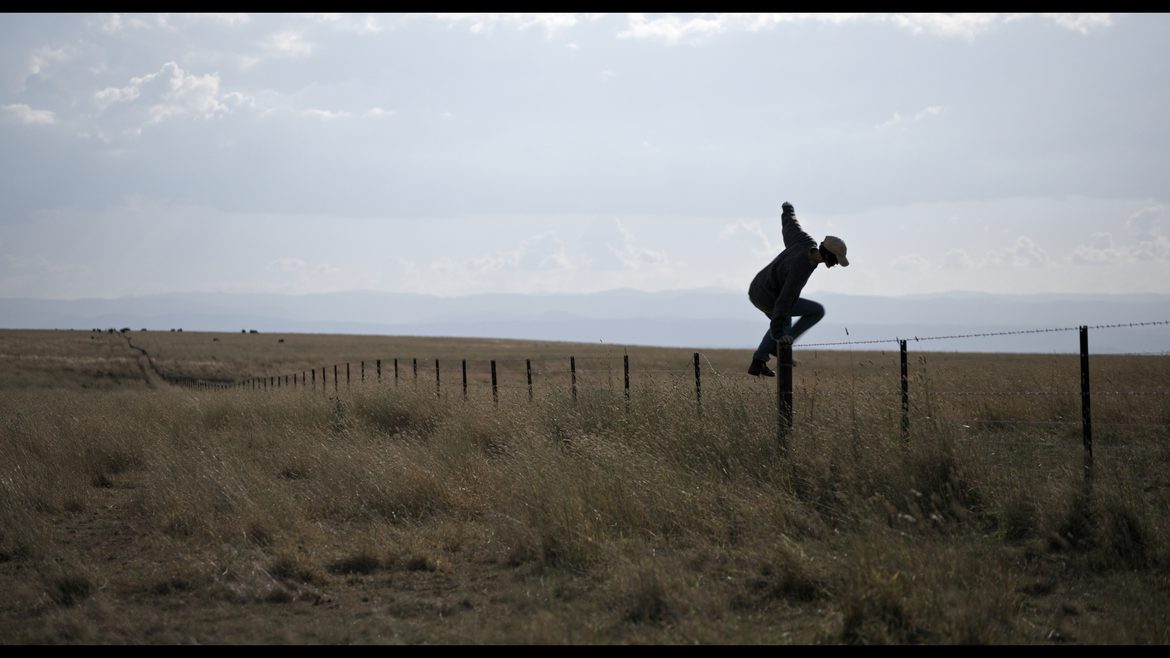
JAMES: Yeah, yeah, exactly. It’s also like, really cold, really dry, really windy. Very few trees. And it’s such a good setting for … not any sort of drama, but like, any sort of story trying to explore a range of textures. It’s this amazing backdrop for a story which is, I hope, both funny and affecting.
CHARLOTTE: Yeah. I used to always, like, drive or stay in Cooma for one night or a couple of nights when we would go to the snow when I was a kid. So, I know the town very well, but outside the town –– I don’t really. It has such a character, like you’re driving into Cooma and it’s still got the Christmas decorations up and it’s amazing.
LUCINDA: Like you [James] and Grégoire, the cinematographer, did a lot of trips and scouts down there. You were very good at being able to sort of articulate, like, the contrast in elements of that landscape … what the darkness of something can bring out, a different feeling even. And then you might have that sort of lighter version where the bird comes out of the tree and the sun hits the light. Because, you know the landscape and like what it feels, like you can find the yin and the yang in it.
LUCY: So maybe it does seem a little patronising to situate, like, the academy of theatre and film as we know it and film festivals and such, at the kind of opposite end to a country ontology where work, life and play all are wrapped up in the happenings of the farm and they’re all at the whims of the environment. So it’s going to ask: How did classical training and, Lucinda, executive production experience, better equip you to tell these local stories?
JAMES: Yeah, an interesting question. In a way, the story is very much about city people in the country. So although it hopefully gives, you know, a country perspective, it is very much just the story of city people in the country.
LUCINDA: Yeah, I also feel like I’ve worked on a few country set projects. And you know, sometimes when it’s written by someone who’s never experienced living in the country, it’s like, a very different experience to the lived one being there. And that’s the thing I found kind of interesting with James is he genuinely has both of those things and you can bring a lightness to the country that sometimes doesn’t get represented; a bit of humour and a contemporariness to it. Sometimes it’s easy to fall into the trap –– maybe it’s a genre trap because of the market –– of danger and horror and things like that. And I think we made a very conscious choice that the film ends with warmth and romance and different shades.
[As for] executive city experience, we just had all these cool creatives who were from Sydney coming into the country and sort of conflicting with that country space. So it really brought out the urban perspective of the characters, and even our actors who hadn’t had that experience were uncomfortable. They found humour and fear in the country. People were a bit afraid at night. And, our costume designer put all these like fresh urban outfits in this country setting, which you probably wouldn’t expect to see. In doing it together, it arrived at its own unique tone because of the very genuinely authentic, or rather very mixed, group of people working on it.
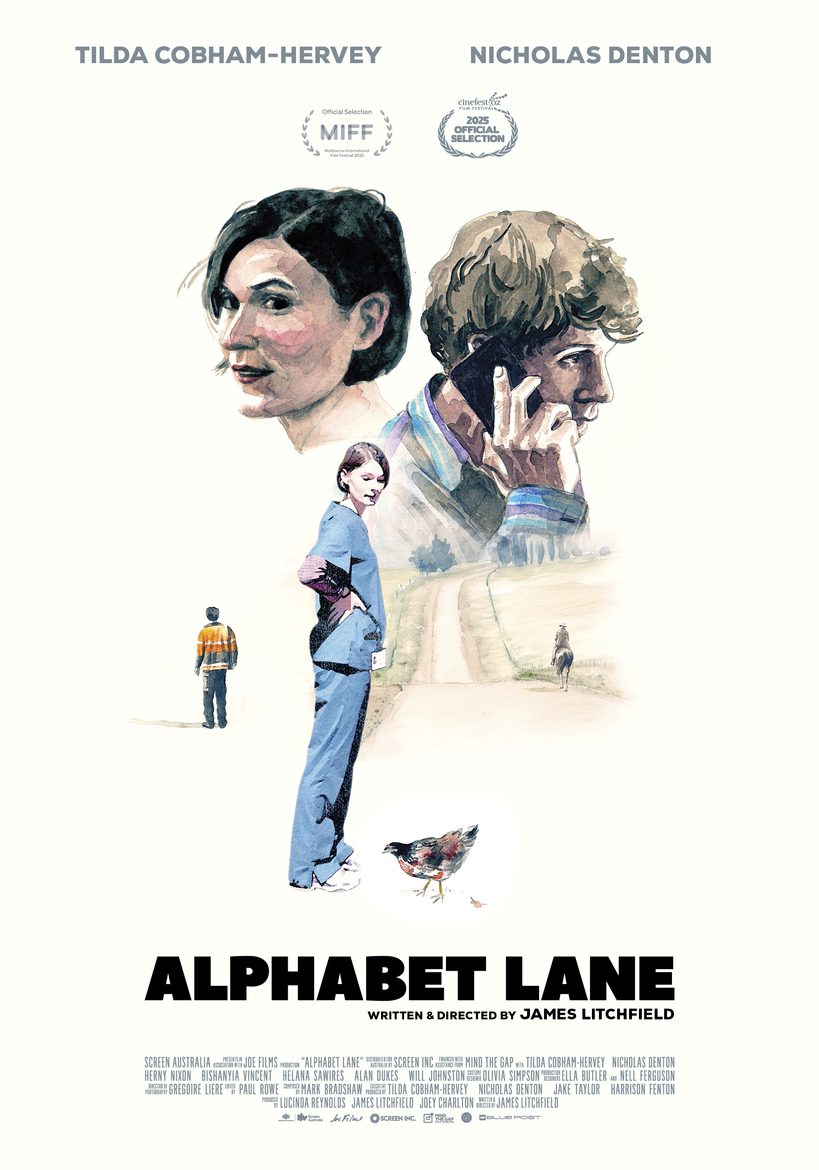
CHARLOTTE: I feel like even looking at the poster itself, it has all these softer colours and tones and it’s like a white poster. A very beautiful poster. Who designed it and what were your ideas with the poster?
JAMES: I think we had this idea to have it done in watercolours. I can’t remember where that came from. Something handwritten, you [Lucinda] wanted. And then we ended up contacting this really wonderful artist called Margaret Ackland who has been in the Archibald a few times. She did the illustrations for it.
CHARLOTTE: It speaks nicely to that idea of imagined characters.
LUCINDA: Yeah, it feels like a dream. I was a bit scared as a producer to have, like, not the face of the actor and to have a white background. But, when you’re sort of making something that feels kind of handcrafted and intimate and its own thing, you end up letting go of that fear of conventions.
CHARLOTTE: Yeah, I feel like a lot of the movie posters used to be hand-drawn or painted like that. So if I saw that in public, I would be like, oh, that intrigues me. It interests me because I’m used to sort of like seeing, like, the heads of all the different people on a massive pyramid, you know?
LUCINDA: It’s lovely. And it’s very tactile and the film is tactile. Like, there’s not a big digital element to the film in terms of characters not being on their phone. That’s all very intentional.
LUCY: I was interested in the soundtrack and the score. How did you go about deciding what you wanted for it and did it align with the themes or the end product?
JAMES: Yeah, so the score was by a guy called Mark Bradshaw. We were very lucky to get him because he’s…
CHARLOTTE: Worked with [Jane] Campion, right?
JAMES: Yeah, exactly. He, well, made a score and it’s mostly built around a male voice and a female voice humming to each other, or each humming. It’s got this mysterious, yearning quality to it. When you have this kind of humming, it’s an odd subfocal sort of attempt at communication. That’s more, I guess, why it worked.
And then the soundtrack itself, the license music we had, we ended up mostly using bands we liked from Melbourne and Sydney to suggest that urbanness. It kind of played nicely with the score because it is that constant contrast of like urban influences on a kind of more cerebral.
JAMES AND LUCINDA: Slingers, from Melbourne, and… Cash Savage and the Lost Drink? Savage, yeah. Annie Hamilton. Um, Cold Chisel. Um… Grace Ives. Proto Moro.
LUCY: Yeah. Sweet. sounds fascinating.
JAMES AND LUCINDA: We can send you a list. We can send you a list of them.
LUCY: Yeah, that’d be awesome. Thank you, because the Radio Group would love to play some of the tracks that featured in your film.
You may also like

RETROSPECTIVE: Batman and Robin and the Caped Crusader’s eternal identity crisis
For its 25th anniversary, Harry Gay reflects on the tug-of-war between grit and camp that led up to

RETROSPECTIVE: 5 years on, The Mummy has aged like a rotting corpse
It failed as a reboot, as a starting point for a cinematic universe, and, of course, as a movie. Har

Film Review: King Gizzard & The Lizard Wizard’s Chunky Shrapnel
Chunky Shrapnel bills itself as “A musical road movie dipped in turpentine”
Post a comment