
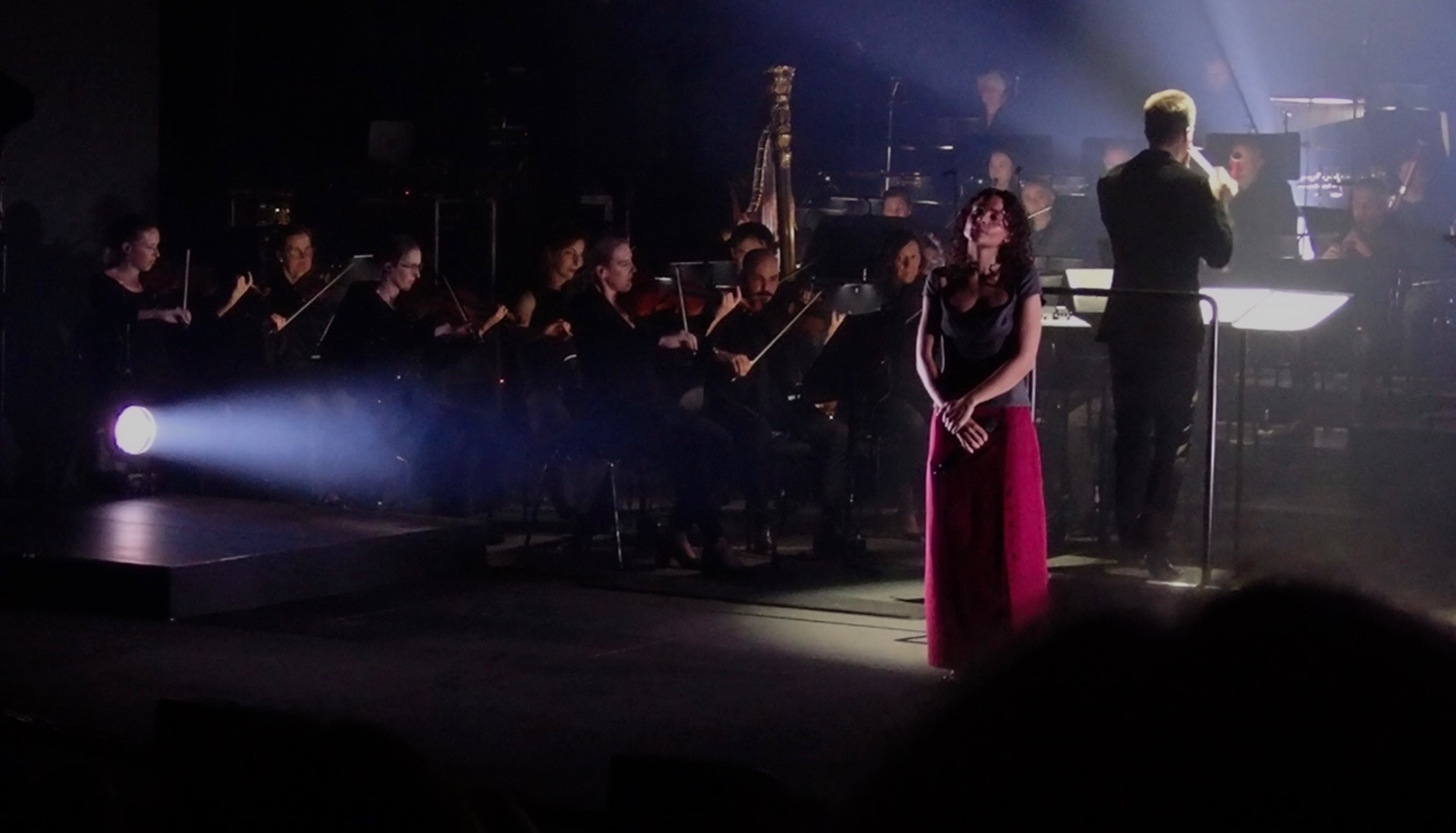
Erika de Casier with the Sydney Symphony Orchestra, live at the Sydney Opera House
Ynes Fernandez reviews …
After coming here a handful of times before in seedier, smaller venues––the Oxford Art Factory for one––the Copenhagener Erika De Casier made her Sydney Opera House debut as part of the Vivid LIVE music program. She brought her drummer, Jonathan Jull Ludvigsen, who inhabited a glass cube propped up with the rest of the Sydney Symphony Orchestra.
The moon was at its first quarter, barely visible in the rainy smog that enveloped the city. Umbrellas opened and closed sequentially; black shrouds of people mopped the pavements clean with dragging jeans; mouths ajar, hopping, skipping, and jumping at the excitement of night.
Teenagers piled into trains at the promise of VIVID’s unrestricted liberties: a curfew past 11. Glasses marred with glistening droplets of rain were wiped on blouses, and jackets were shoved under the theatre’s collapsable seats.
Yawning Portal was cursed with burnt amber lights that sometimes drifted into a cooler hue. Jess Mai Walker and Joseph Ware were almost nondescript, their faces melding into the ephemerality of the music. A cello lay between them like a dead fish waiting patiently.
The set stretched from celestial bird noises to assemblages of synthesised vocals. Moving through the space, they began with meditative, simple notes before introducing layers of soft electronic vocals that collapsed back to a simpler ambience. The London-based duo (their name a D&D allusion) demonstrated an admirable honed and nerdy attention to ambient swirls, pedantic beats, synthy vocals, and found sound: extremely maximalist, fostering a very cinematic experience. Their project tells of hours of searching to find and capture, paradoxically, an effervescence. It was this intermediary space––between silence and sound, smiling–– that soaked into the theatre and mixed with breathy “HIIIII“s from stragglers at the back. The spinning geometric patterns projected beneath them widened and changed to purplish hues for brief glimpses in parallel to piano samples and EDM progressions.The music intensified with soulful vocals, building and building to its fastest tempo just before it ceased.
It was this intermediary space––between silence and sound, smiling–– that soaked into the theatre and mixed with breathy “HIIIII“s from stragglers at the back.
They finished and the lights rose.
The stage morphed to host three cellos and music stands, a harp, and two sequinned violinists. In fierce platformed heels––chic, with no back but thin strappy buckles lacing across the fronts––De Casier strutted, hips forward, to position herself in the dark amongst the Orchestra. Their bows rose and I was washed over by the dulcet stressing of strings.
Propped on the left side elevation, she sang ‘December’ softly but with sassy inflictions, swaying side to side. Her closed eyes would open during the in-betweens, throwing a smile and singing through her teeth. Initially slightly pitchy and nervous, her rap-adjacent spoken word loosened with hair flicks and giggles that elicited screams from the audience. We all writhed, dancing in our seats. In conversation, her voice shook only enough to be endearing and human. Sweetly, she spoke about the opportunity to play these arrangements––which she credited to the orchestra’s synthesist––and to be on such a stage. These were songs she made in her apartment, alone. She made note of her mother travelling all this way with her and spoke of her with her hands.
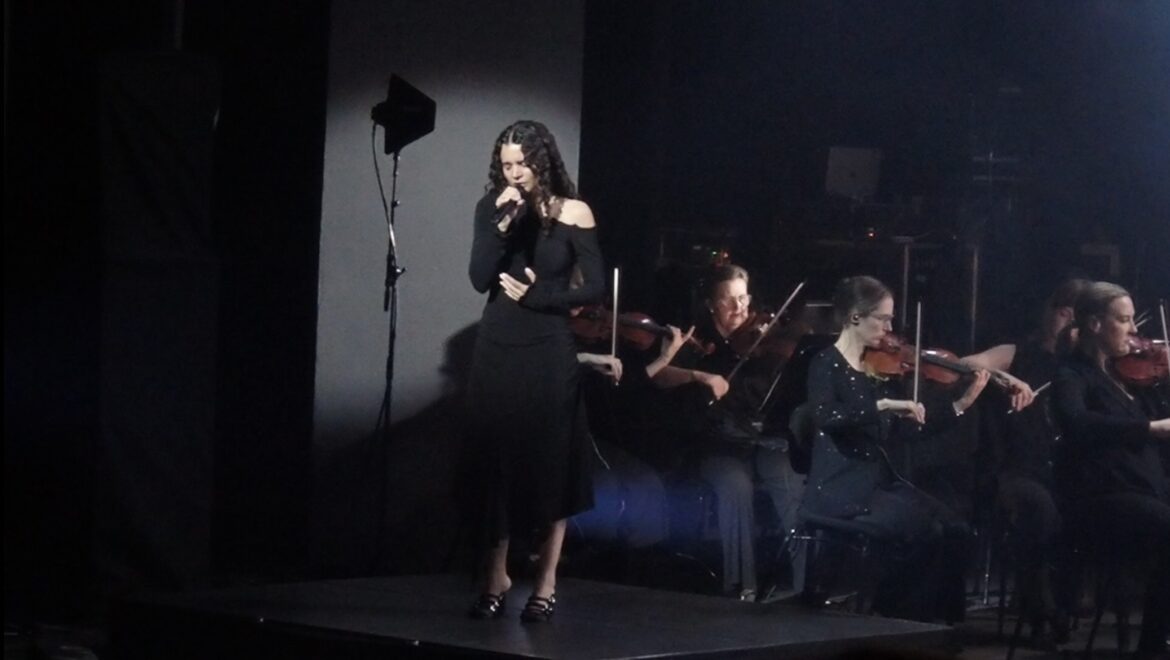
These were songs she made in her apartment, alone. She made note of her mother travelling all this way with her and spoke of her with her hands.
‘The Chase’ picked up in dancier tones and a quicker tempo. The orchestral arrangements drifted in and out of harmony with the bedroom-pop style––juxtaposing at some moments more than others––but never so drastic to the point of inhibiting enjoyment. The set fluctuated for its entirety, the sound following De Casier as she perambulated the stage for a more lo-fi song, whispering vocals, before the strings crept into the forefront (engendering images of A Midsummer Night’s Dream’s score). Brooding and fantastical. It was an interesting collision of worlds that really worked for the most part. The orchestra had some solo moments, showing off their complexities: their dark wood’s fairytale soundscape was overwhelmed with synthesisers and abstracted to manufacture new hypnotic, futuristic sounds. Jonathan, too, had a very impressive drum solo: quick, rhythmic, and gritty.
The orchestra’s … dark wood’s fairytale soundscape was overwhelmed with synthesisers and abstracted to manufacture new hypnotic, futuristic sounds.
Toward the second half of the show, she left for a moment as the Orchestra played and came back in a new outfit. An elegant black dress that draped, cinched and hung off her shoulder became a red vintage-looking pencil skirt with a slit and button details and a structured grey top with a wide neck, which, to my eye, looked like ‘all is a gentle spring.’ Her shoes stayed the same.
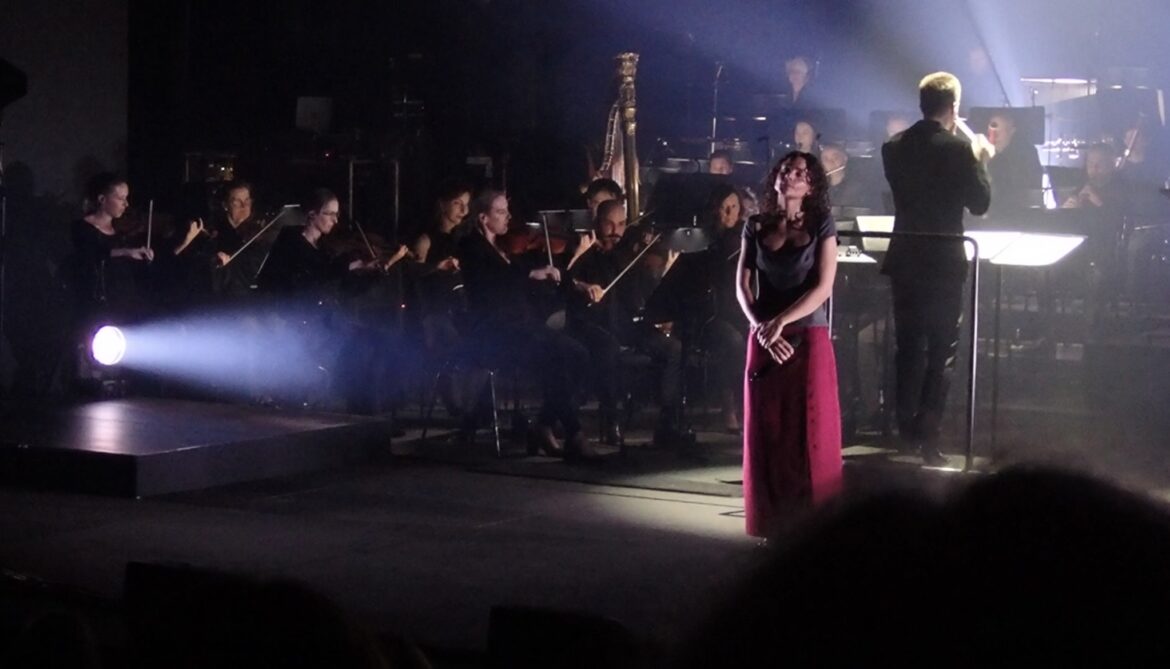
Her final song ‘Lucky’ and the magical twinkling of string instruments, the harps and eerie violins picked up to fast-paced percussion. The drums, replicating DNB break beat sounds, highlighted that UK garage influence that we see in much of her regular production style. The lights swam the same way the sun breaks when underwater. A standing ovation was given. The room emptied to leave only glowing conversations of “how fantastic…” and “how beautiful…” lingering in the wafts of Aesop perfumes, clove, and the notes of red wine on breath.
The room emptied to leave only glowing conversations of “how fantastic…” and “how beautiful…” lingering in the wafts of Aesop perfumes, clove, and the notes of red wine on breath.
A contemplative train ride home next to a group of American exchange students on their way home to Fairy Meadow … Thank you VIVID, thank you Sydney.
You may also like

’23 Splendour Spotlight: Loyle Carner
If ‘You Don’t Know’ Loyle Carner, there’s ‘Still’ time to tie up ‘Loose Ends’ and di

Retrospective: Fifty years on from Goats Head Soup, have the Stones’ critics learned anything?
At the end of the day, the Stones rock on. The history of the Rolling Stones is, in large part, a hi

Saint Lane: Locked In, Not Down
The Artist on quarantine, socially distanced shows, and Kanye West
Post a comment