
mariners and woodsmen: salem, live at the sydney opera house 22/05/26
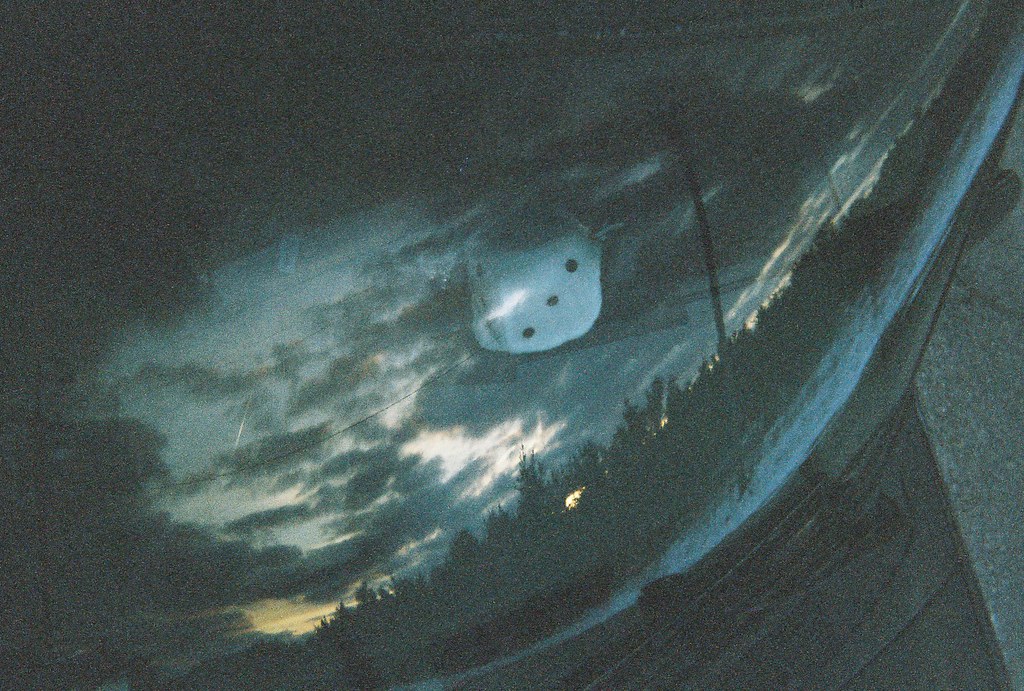
Feature Image: ‘snake eyes’ by John Holland.
Ronan Linsley reviews …
Emerging from the haunting pinelands comprising the state of Michigan is one of our generation’s most defining sounds. Equal parts melodic, harsh, and transcendent, SALEM have cemented themselves in the zeitgeist as forebears of a uniquely unlistenable variant of electronic music known as witch house. Resisting easy categories of genre, yet being credited with pioneering at least a couple, they possess a chameleonic quality, slinking around the most bewildering of scenes across the North American continent.
I had the opportunity to attend their performance at Vivid LIVE in the Joan Sutherland Theatre, thanks to the generosity of the Sydney Opera House.
Aptly dubbed ‘boy Crystal Castles’ by the initial designated author of this piece, the group developed their sound around the same period and at a similar latitude. Indeed, both bands are praised as progenitors of a distinct sound which has melted into derivative fault lines in the mid-2020s.
Information about their early lives is scant, with many early articles documenting their ascension, circa 2008, to the scene along with vague allusions to the immediate past. Since their reformation in 2020, the internet has been flush with anecdotes of SALEM’s infamous hedonism and erraticism. The face of the group, Jack Donoghue, has aroused attention for his admittedly-random mid-profile relationships with Lana Del Rey, Julia Fox, (allegedly) Courtney Love, and most recently, Ethel Cain. Heather Marlatt remains elusive, counted out from the band’s reformation but haunting earlier releases with her drowned vocals in some personal favourites (see ‘Asia’, ‘Frost’, and ‘Ohk’). John Holland, renowned for both his musical aptitude and photographic output, is the binding force that drives the soundscape of King Night and subsequent releases. Dabbling in some of the darkest elements that the Midwest buries, the group notoriously spent months chasing storms, endured famous benders, and spent years in the revolving door of copyright strikes with artists like Alice Deejay.
Investigating SALEM’s creative prowess as merely lucky is a fool’s errand. I’m not entirely certain they knew precisely what they were doing, but the clarity of Holland’s musical vision is proof to me that the music is inherently self-aware. One cannot accidentally make a witch house song. Across the board, the lyrical content and track titles are at times humorously dark. Evoking a classic horror trope, naming the malevolent strips it of its power and defies abstraction.
I’m not entirely certain they knew precisely what they were doing, but the clarity of Holland’s musical vision is proof to me that the music is inherently self-aware. One cannot accidentally make a witch house song.
Where SALEM vaguely alludes to the pernicious rituals and agony associated with their namesake coven, other artists under the witch house umbrella impart a more comedic bite to much the same matter. Figures such as White Ring, Mater Suspiria Vision, and the more CC-aligned Sidewalks and Skeletons all play into the edgy narrative the music conjures.
In his 2008 interview with New York-based journalist Michael Bullock, Holland incarnated SALEM’s early mystery: the factors that pulled the three together, and the unshakeable Midwestern archetype slash patrimonial entity that underpinned their jagged, dense melodies and indisputably ‘masculine’ public face. His reference to the ‘Woodsman’––a recurring client during his time in sex work–– made the socioeconomic afflictions that have bound the Rust Belt since the 1970s ever more clear as the influence. The departure of steel and automobiles paired with institutional neglect laid the groundwork for a sickness to spread through the land. In my opinion, this is the core essence of SALEM’s music. It is not a sound tied to one city or scene, rather a distillation of a deep, noxious flame burning at the feet of Middle America.
The departure of steel and automobiles paired with institutional neglect laid the groundwork for a sickness to spread through the land … a distillation of a deep, noxious flame burning at the feet of Middle America.
An ebony statue with a silhouette strikingly similar to Queen Victoria averts her eyes from the crowd, idly dominating the stage’s centre. She stares downward: in tracing her gaze, one finds it descends northwest into the harbour. The smoke machines erupt before Donoghue or Holland are even sensed. All that is now visible is the dulled tricorne atop her visage.
When they emerge, SALEM is immediately recognisable. John Holland’s oversized attire belies his slender frame. It’s the silhouette of a mariner of the freighter Edmund Fitzgerald, lost to the pristine glacial hollows of Lake Superior (drawn five-hundred feet from its base and dropped into warmer waters on the other side of the planet). Only the marble demiurge guarding twenty-two roses of the finest blanche keeps him alive.
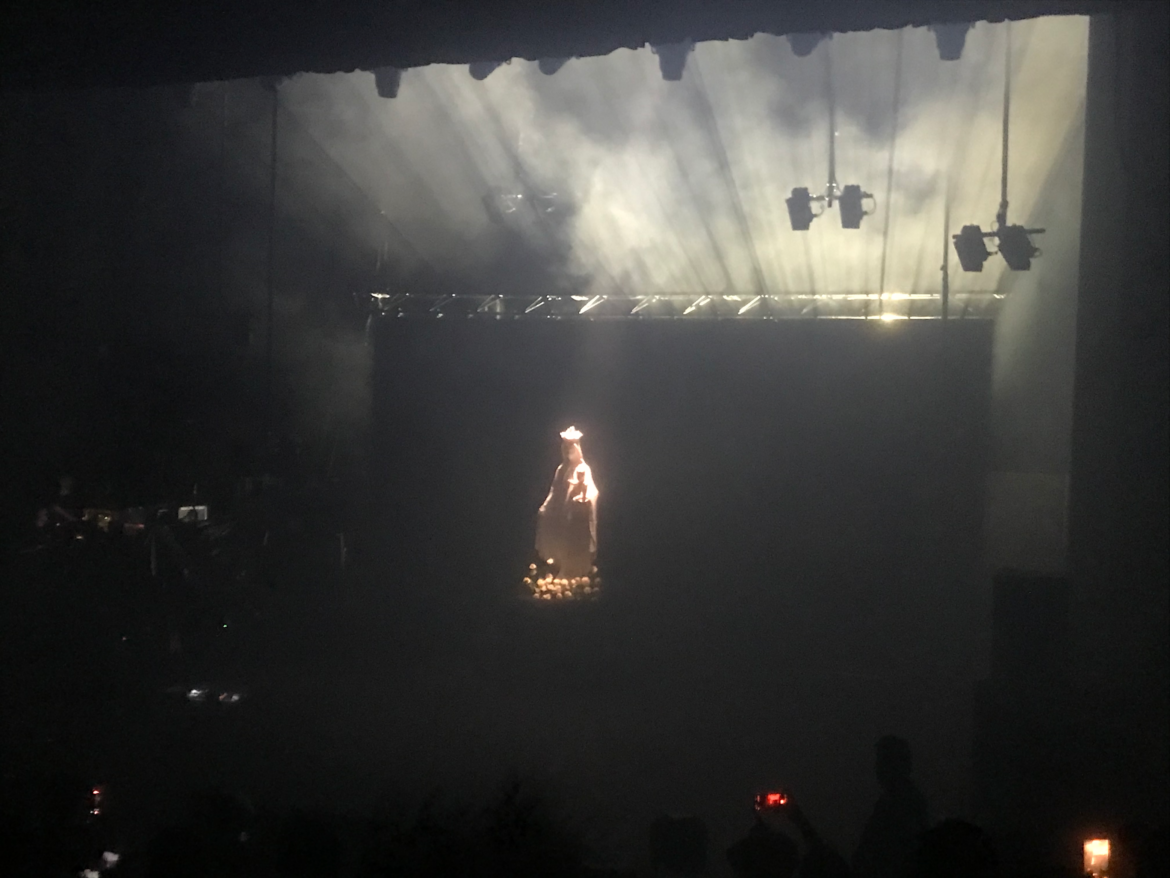
Keeping with their past performances, they open with two unreleased tracks currently relegated to vocal stems and loose drum pads. The orchestral backing of ‘Capulets’ incites the audience to rumble fervently, a task interspersed with attempts to follow Donoghue’s words. A searing spotlight dances erratically across the theatre and its targets stir reverently each time it lands. Fog is drawn upward by colossal exhaust fans which can be heard beneath the lowest frequencies emanating from the stage. Any prurience Donoghue may have instigated evaporates amongst the smoke that harbours him from our prying eyes.
Fires in Heaven fanatics are indulged as the tracks progress, punctuated by throwbacks to I’m Still in the Night and previously-unheard work. I track the collective mood by the chattering of inebriated teenagers in the seats ahead of me. Lightly corroding SALEM’s illusion was the parity between the audio quality familiar on a home speaker and that of the Opera House; I hesitate to call certain songs ‘live’ performances, perhaps acting as their recuperative moments in the midst of this captivating set. The mix sounds no different to that which Spotify provides.
I’m mostly seated until the moment ‘Starfall’’s opening drone reminds me of its soul-splitting quality––the most delicately composed leap between pitches I’ve ever heard. I fail to recall the intricacies in between then and ‘King Night’ as the theatre’s energy renders my senses useless, barring my shock at their cover of ‘Better Off Alone’. A friend of mine comments, toward the song’s close, “They’re about to play ‘Better Off Alone’”! So drowned is the distinctive synth that he goes a whole six minutes unable to identify it (I’m surprised it was even cleared for performance given its tenuous copyright situation).
‘Starfall’’s opening drone reminds me of its soul-splitting quality––the most delicately composed leap between pitches I’ve ever heard.
‘King Night’ breaks out. Raptured by the choral backing vocals against the most satisfying snares ever programmed and a fascinating chord progression, I recall many a shower to this album and feel my skin melt. I want to stay in this shower forever. Ending the set with ‘Not Much of a Life’, Donoghue and Holland exit the stage as punctually as they entered. It seems that the theatre is in favour of a collective departure; nobody is chanting for an encore but the theatre is still far from silent. I’m certain that a Hillsborough-level crush is imminent inside the north corridor, where the merchandise line literally stretches upstairs to the end of Bennelong Point. Expletives and thinly-veiled digs at those flouting the line tell me I must resist temptation.
The dispersion of the crowd, with no souvenirs apart from the three SALEM-branded garments, leaves the night a little too open for most. No meet and greet; no set list. I suppose that was their intention, to set us adrift with only what we know as true to guide us.
You may also like

Concert Review & Gallery: Sydney City Unlimited
I watched a woman crying tears of joy from the thrill of the music, and another one deri
Mama Subpoena: Here We Plead Again – A Revue, Reviewed
Swapping the canvas page for the big stage, the Law Revue is back again! In a witty celebration of S

Six Tunes: To Feel All The Feels To This Mental Health Month
This week’s Six Tunes have been picked to help you feel ALL the feels, from air-pumpin
Post a comment